Remote job scams are becoming harder to spot.
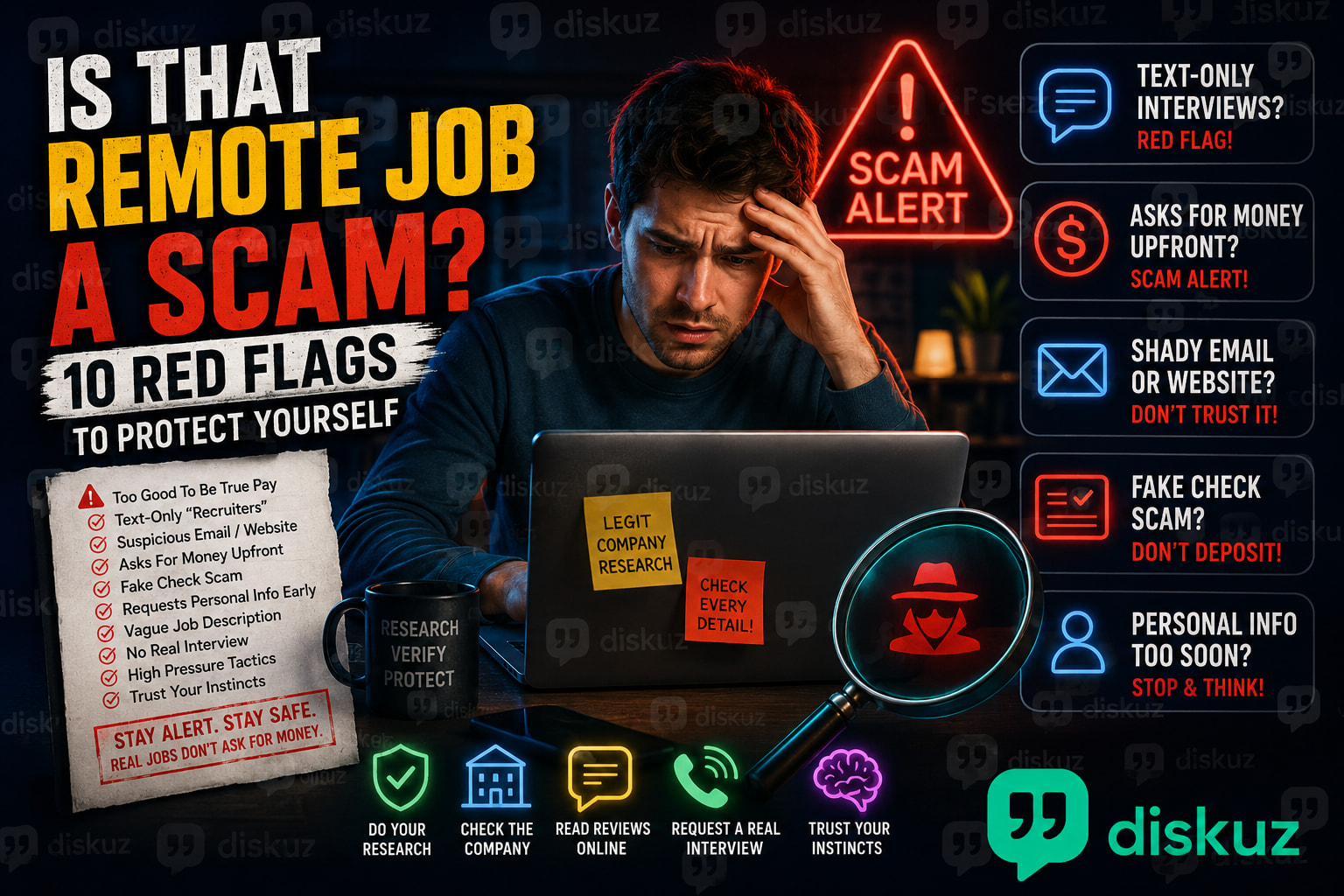
A job posting promises flexible hours, work from home, fast hiring, and great pay. Then a recruiter contacts you through text, WhatsApp, Telegram, LinkedIn, or email and says your resume is exactly what they need.
Some remote jobs are real. Others are a work from home scam designed to steal money, personal information, or access to your bank account.
Knowing how to spot a fake job posting can save you from a stressful and expensive mistake.
 1. The Pay Sounds Too Good for the Job
A common remote job scam offers high pay for very simple work:
- “Earn $500 a day from home”
- “No experience needed, $35 per hour”
- “Work 30 minutes a day and make $1,000 a week”
- “Get hired today and start immediately”
Legitimate remote jobs can pay well, but they usually explain the role, skills required, schedule, hiring process, and salary range.
If a job offer sounds like easy money with almost no details, treat it as a possible job offer scam.
 2. The Recruiter Only Wants to Use WhatsApp, Telegram, or Text Messages
A recruiter may send an initial LinkedIn message or text. That can happen.
The warning sign is when the “recruiter” refuses a phone call, video interview, or conversation through a company email address. Instead, they only want to communicate through:
- Telegram
- Signal
- SMS text messages
- A chat-only interview
Many fake recruiters use messaging apps because accounts are easy to create and delete.
A real company may use Microsoft Teams, Slack, or Google Meet, but you should be able to verify who you are speaking with and where they work.
 3. The Company Website or Email Address Does Not Look Right
Before you reply, visit the official company website and compare the recruiter’s details.
A fake recruiter email may look almost real:
companyjobs@gmail.comhr-company-careers.comcompanyname-careers.net- A misspelled version of the real company domain
A legitimate recruiter will usually use an official company email address, not a free Gmail account.
Search the company name along with:
- “job scam”
- “fake recruiter”
- “remote job scam”
- “reviews”
Also check whether the same role appears on the company’s real careers page.
 4. They Ask You to Pay Money Before You Start
This is one of the biggest job scam red flags.
A legitimate employer does not ask you to pay for training, background checks, equipment, software, certifications, job placement, or a “starter kit.”
Never pay money to get a job.
Be especially careful if someone asks for payment through gift cards, cryptocurrency, Zelle, Cash App, Venmo, or wire transfer. Those payment methods are common in scams because they are difficult to reverse.
 5. They Send You a Check to Buy Equipment
The fake check scam is one of the most common work from home scams.
The scammer says you are hired and sends you a check to buy a laptop, printer, or home office equipment. Then they tell you to deposit the check and send part of the money to their “approved vendor.”
The check may appear in your account at first, but it can later bounce. You lose the money you sent and may also get charged bank fees.
Never deposit a check from a new employer and send money to another person or company.
 6. They Ask for Personal Information Too Early
A real employer may eventually need your Social Security number, bank account details, or ID for payroll and tax paperwork.
That should happen after a verified interview, a written job offer, and real onboarding.
Do not send these details through WhatsApp, Telegram, text message, or an unverified email:
- Social Security number
- Bank account or routing number
- Driver’s license or passport photo
- Credit card details
- One-time verification codes
If someone asks for this information before you have even spoken to a real person, stop.
 7. The Job Description Is Vague or Copied
Many fake job postings use generic language:
“Online assistant needed. Flexible schedule. Great income. Apply now.”
A real job listing should explain what you will do, who you report to, the required skills, and how the role fits into the company.
Try copying one unusual sentence from the listing and searching it in quotation marks. If the same job description appears under multiple company names, it may be a scam.
 8. There Is No Real Interview
A legitimate remote job normally includes a phone call or video interview.
Be careful if you are “hired” after a few text questions, a chat-only interview, or a form that immediately asks for personal information.
Fast hiring is not always a scam. But an employer offering you a job without speaking to you should raise serious doubts.
 What to Do Before Accepting a Remote Job Offer
- Visit the official company website
- Check the recruiter’s company email address
- Search the company name plus “scam”
- Find the job on the official careers page
- Ask for a phone or video interview
- Never pay to get a job
- Never deposit a check and send money elsewhere
- Do not share personal information before verified onboarding
 FAQ: Remote Job Scams
How can I tell if a remote job is a scam?
The biggest warning signs are unrealistic pay, text-only interviews, a fake recruiter email, requests for money, fake checks, and requests for personal information before you are hired.
Do real recruiters contact people through text or WhatsApp?
Some recruiters may send an initial message through text or LinkedIn. A real hiring process should then move to a verified company email, phone call, or video interview.
What should I do if I gave information to a job scammer?
Stop communicating, save screenshots, change passwords if you shared login details, contact your bank if you shared financial information, and report the fake job posting to the website or app where you found it.
A real employer will not pressure you to send money, deposit a check, or share sensitive details before you are properly hired.
What was the first thing that made you question whether a remote job offer was real?